
Choosing decking isn’t just about how your backyard will look this summer. In Oregon, it’s a long-term decision that affects how much maintenance you’ll deal with, how long your deck will last, and how much value it adds to your home over time.
With frequent rain, high humidity, and limited drying periods, Oregon’s climate is tough on outdoor structures. Decks that aren’t built with moisture in mind often start showing problems sooner than homeowners expect—warping boards, surface cracking, moss buildup, and costly repairs.
That’s why deciding between wood and composite decking shouldn’t be based on upfront price alone. When you look at durability, maintenance, and long-term performance, the difference between the two becomes much clearer.
Unlike places with long dry seasons, Oregon gets rain frequently and is almost always humid, so exterior surfaces stay wet for quite a long time. Even in the summer, if there are trees and the deck is in shade, then the deck will not dry up very fast after the rain.
This constant moisture coming from the outside breaks down the materials of the deck at the very structure level. Water trickles in through the seams, joints, and nail points, thus, causing repeated expansion and contraction. When the materials are not fit for such conditions, the problems like deformation, cracking, moss growth, and even the fast aging of the material can show up significantly earlier.
Therefore, decking materials which are a great choice in drier regions do not necessarily work well in Oregon. Here, at the time of making the decision on what type of decking to use, one has to think not only about the look it has to be about the capacity of the material to resist moisture, its stability, and its performance over time.
Wood decking remains a popular choice because of its classic look and lower upfront cost. Many homeowners love the warmth and character of real wood, and it can be customized easily to fit different designs.
However, wood is naturally absorbent. In Oregon’s damp conditions, it requires consistent upkeep to stay in good shape. Without regular maintenance, wood decks can begin to:
To extend the life of a wood deck, homeowners need to commit to routine cleaning, sealing, staining, or painting. Even with proper care, individual boards often need replacing over time.
Wood can be a good option if you enjoy hands-on maintenance and are prepared for ongoing upkeep—but it’s not a “set it and forget it” solution.
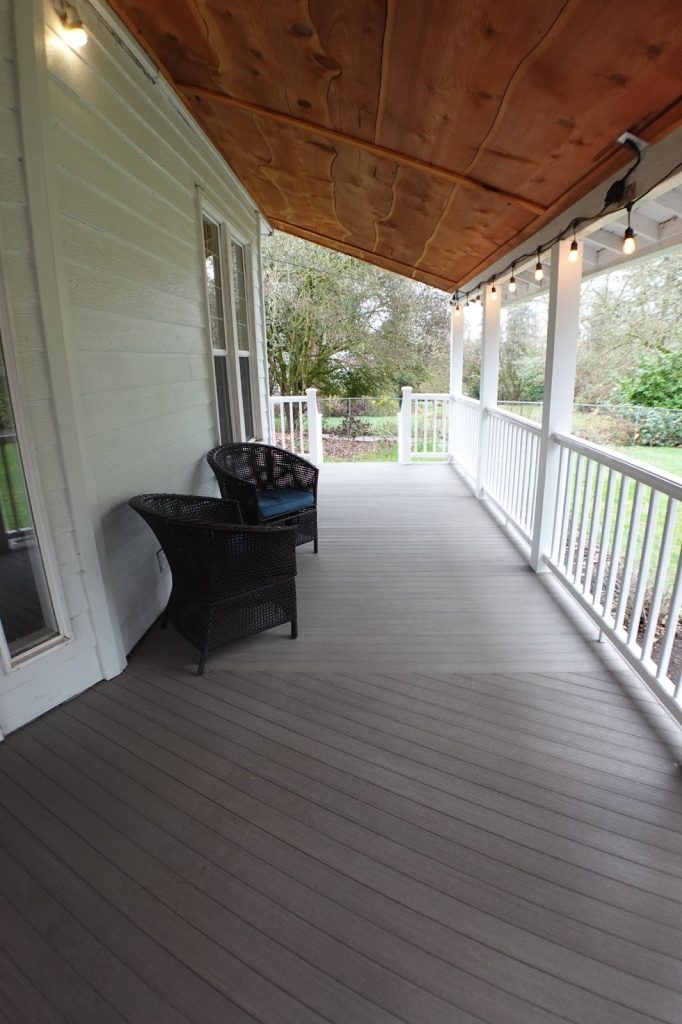
Composite decking is made from a blend of wood fibers and plastic, designed to replicate the look of wood while minimizing its weaknesses. These boards are engineered to resist moisture, insects, and decay—key advantages in Oregon’s climate.
While composite decking does cost more upfront, it offers:
Most composite decks only need occasional cleaning to stay looking good. There’s no sanding, staining, or sealing required, which makes them appealing to homeowners who want to spend more time enjoying their deck instead of maintaining it.
At first glance, wood decking is usually the more affordable option to install. However, that initial savings often shrink over time as maintenance and repair costs add up.
Composite decking requires a higher initial investment, but because it lasts longer and needs far less maintenance, many homeowners find that the overall cost evens out or even favors composite over a 10- to 25-year period.
The real question isn’t which deck costs less to build, but which one costs less to own.
Wood decks are a high maintenance item that needs regular cleaning, sanding, sealing, staining, or painting to stay in good shape for a long time. One can easily get moisture damage, splintering, and structural issues due to the lack of maintenance as the climate of Oregon is very harsh in this regard. However, repairs and board replacements still remain a common occurrence even if the wood is given a thorough care.
Composite decking cuts down the maintenance work of wood decks considerably. Besides, it has the advantage of not needing to be sealed or stained, and in most cases, general care only means an occasional cleaning. For many homeowners, the biggest advantage of a composite deck is that it takes less time and effort to maintain it.
Eventually, maintenance might not only be a matter of finances but also a matter of lifestyle. While some homeowners find pleasure in the regular maintenance of their homes, others would rather spend their weekends enjoying their deck than working on it.
Wood decking exudes a natural warmth and charm, and can develop a weathered appearance after a few years which is quite attractive to some homeowners. Besides that, it is usually cooler to walk on in the summer and can easily blend with outdoor environments.
Composite decking offers a more uniform look with color and surface texture that remain unchanged over the years. Some composites may shine and get hotter under direct sunlight but since most of the areas in Oregon are shaded, this should not be a problem.
At times, deciding between wood and composite is just a matter of taste: whether one likes natural fluctuations and aging or uniformity and hardly needs any maintenance.
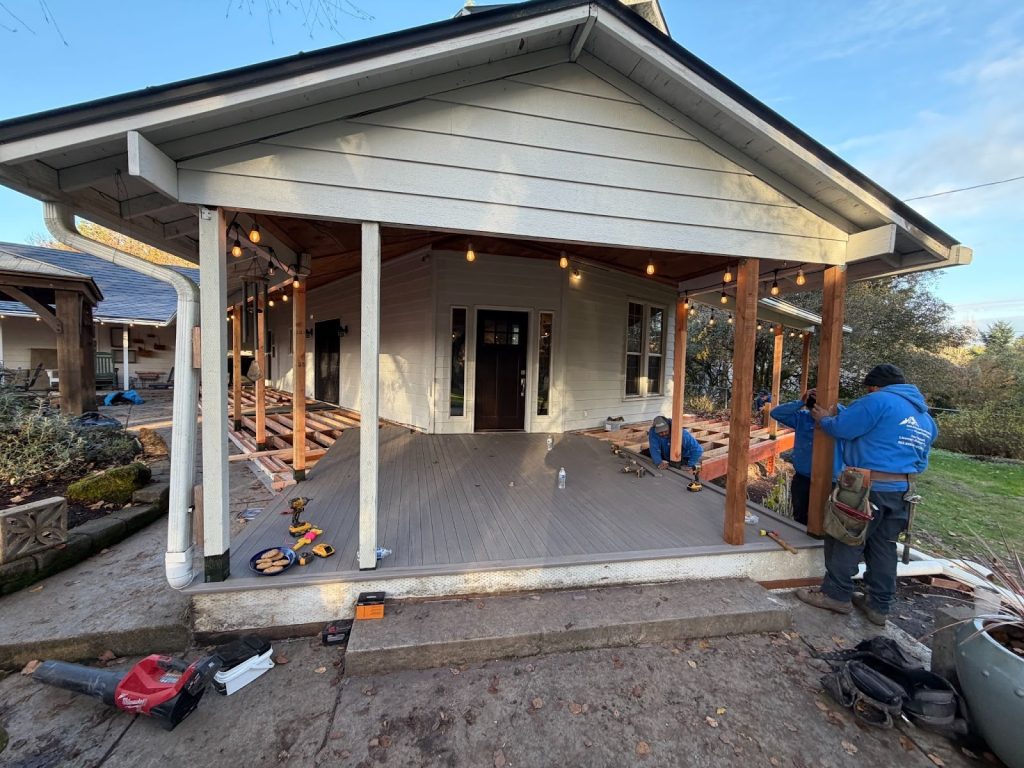
A deck is one of the things that can influence buyers decisions about a home. A nicely kept wood deck will definitely attract buyers who are nature lovers, however, worn out wood or a deck that needs repairs may scare buyers away.
On the other hand, composite decking is more appealing to buyers who value durability and low maintenance. If a deck looks neat and is in good condition structurally even after many years of use, it can represent an investment that is appreciated over time, especially in a wet place like Oregon.
There is no right answer that fits everyone, the best option depends on what you value, your surroundings, and your way of life.
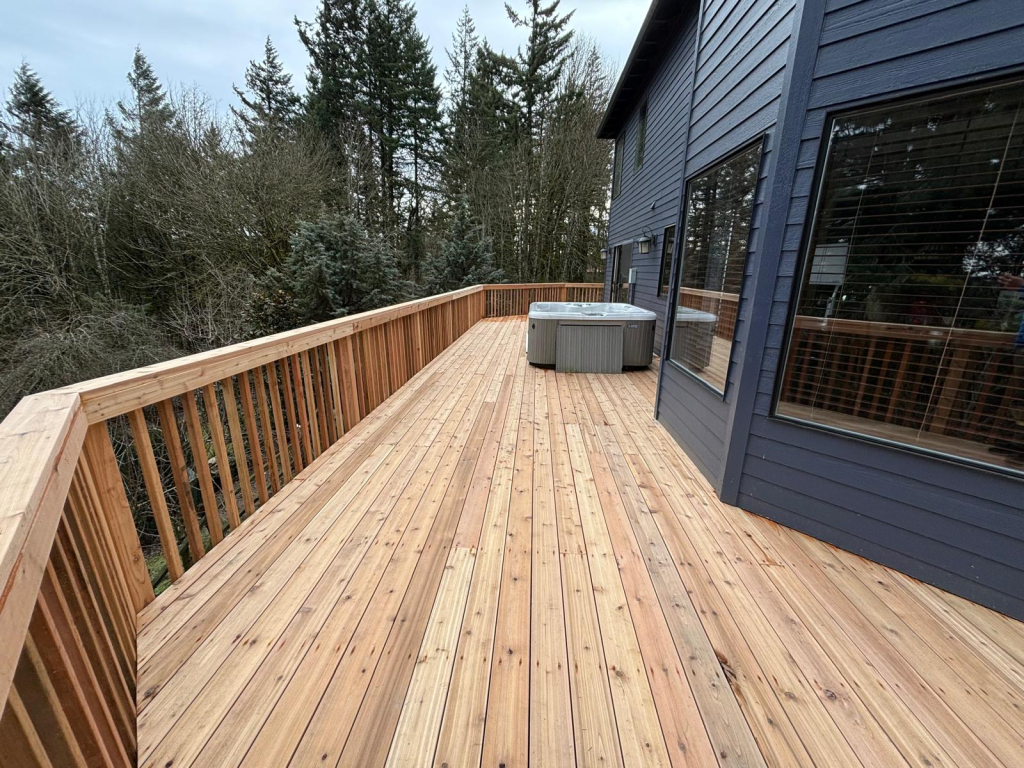
In Oregon’s climate, the choice of decking should be guided by the long term performance of the material rather than just how it looks or the initial cost. Wood has the advantage of being naturally beautiful but it will need regular upkeep. On the other hand, composite decking is a good investment in terms of durability, resistance to moisture, and long term value as it requires less maintenance.
You can decide on the product that will safeguard your outdoor living space as well as your investment by contemplating your deck’s performance over the next 10 to 25 years.
Every home is different, and Oregon’s climate makes material selection especially important. A professional assessment can help you choose the decking option that makes the most sense for your property.
Salexx Construction provides decking services throughout Oregon and helps homeowners make informed decisions based on durability, performance, and long-term value.
Contact Salexx Construction today to schedule a decking consultation and get expert guidance tailored to your home.

Copyright Salexx Construction LLC | All Rights Reserved | Privacy Policy | Website by Musimack Marketing